
Livestock / Cow Brush Roller
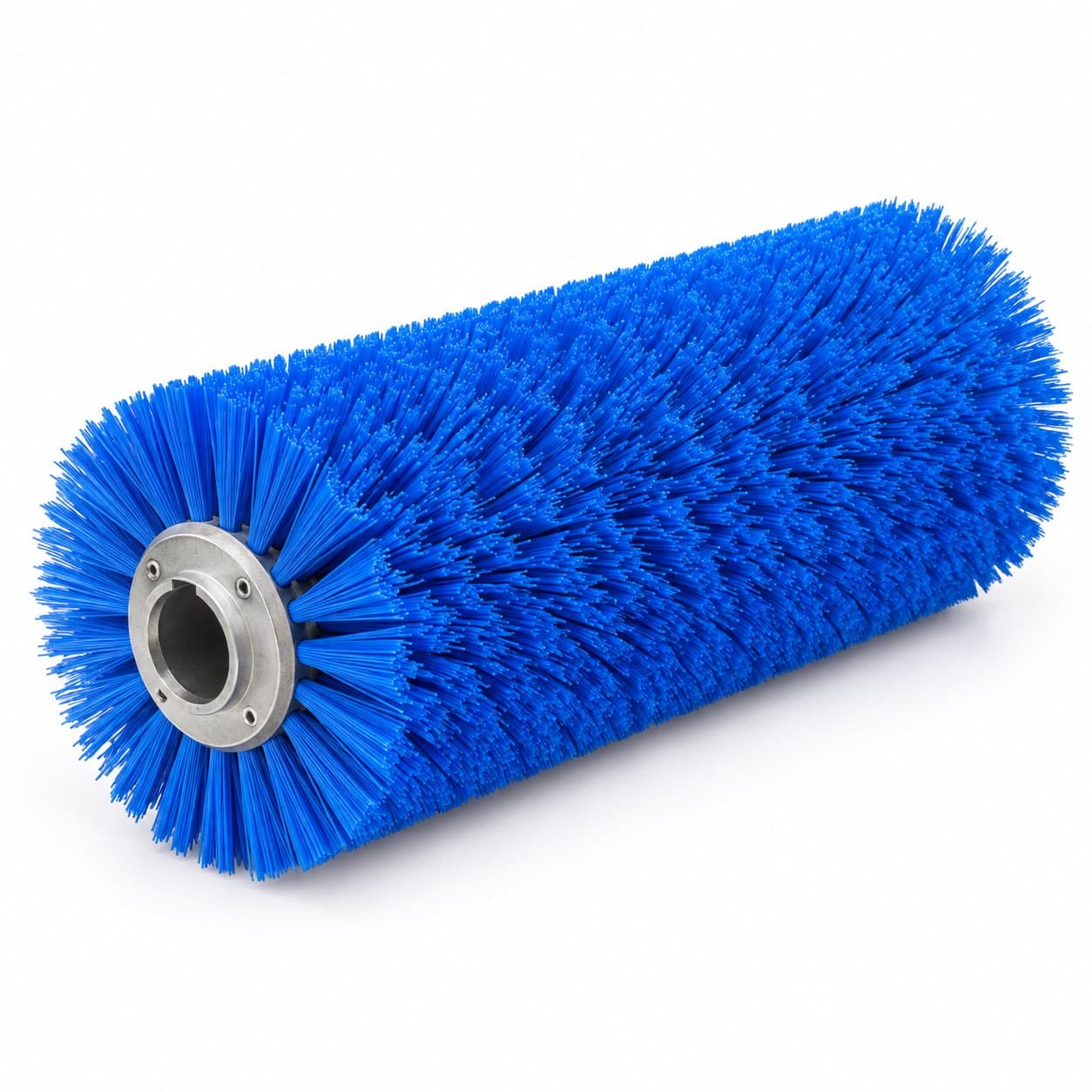
A rotating cow brush only works as well as its brush head. The roller is the part the cows actually touch, and it is the part that wears: after months of daily rubbing the filament flattens, tufts thin out and the cows use the brush less. Rather than replacing the whole machine, dairy farms and dealers replace the brush head — and that replaceable brush roller is exactly what we make. We supply the brush head only, not the motor, frame or controller.
Each head is built to match the machine it goes on. Outer diameter, overall length, the core tube or shaft, and the mounting hub at each end are taken from your old brush, a drawing or a set of measurements and confirmed before production, so the new head drops onto the existing drive. The filament is UV-stabilized PP or nylon at roughly 2.0–2.5 mm — stiff enough for a satisfying scratch on the neck, back and flanks, flexible enough to stay animal-friendly — in blue, yellow or a custom color.
As typical guidance, a head serving a pen of around 50 cows is replaced roughly every 18–24 months, depending on herd size and use. Dealers and farm-equipment makers can order mixed sizes, private-label packaging and repeat batches built to the same confirmed spec. Send photos and measurements of your current head through the quote form, or read the replacement cow brush head guide for what to measure.
Frequently asked questions
- Do you sell the complete cow brush machine?
- No — we make the replaceable brush head (brush roller) only. It is built to fit the motor, frame and drive you already have, so you replace the worn part instead of the whole unit.
- How do you make sure the new head fits my machine?
- Diameter, length, core tube or shaft and the mounting hub are taken from your old head, a drawing or measurements and confirmed with you before production. Photos of both ends of the old head help most.
- How often does a cow brush head need replacing?
- As typical guidance, a head serving a pen of around 50 cows lasts roughly 18–24 months; heavier use or larger groups wear it faster. Flattened or missing tufts and cows using the brush less are the usual signs.